


Gemini 4 Neon: API cost of reviewing a PDF — What the published evidence supports
The table shows provider-reported scores under the settings described by Google. The displayed rows have different tasks and denominators. Keep the benchmark name and version with any number you quote. If a score is missing, leave it blank in the comparison and use the shared rows as the basis for interpretation.
For each representative PDF, record page count, file type, billed input, billed output, retry count, and task outcome. A scanned invoice and a searchable policy may have the same page count but very different costs. Establish cost bands using observed usage instead of one conversion rule for all files.
Sources: Google’s Neon announcement · DeepMind’s Neon model card · Gemini API pricing documentation
Define the decision and a passing result
An operations team reviews contracts and needs a per-file budget before accepting batches.
Write one line that explains what a reviewer must see to accept the result. For this case, check observed billed units, pages, and retry frequency. Keep the success rule in the worksheet next to the input revision. A person reading the record should be able to tell why an output passed without being told which model produced it.
Use a routine version of the pdf cost estimate case first. Then change one condition to make the easy answer invalid. The example to look out for is this: two 30-page files are budgeted equally even though one is image-heavy and requires additional work. Write the expected response before trying either candidate. Use a second, held-out input if you adjust the prompt after looking at the first result.
Give each example a common denominator before comparing cost. Decide whether you are forecasting per attempt, per accepted result, per user, or per month. Keep the currency and units beside the number. In a shared spreadsheet, store per-million rates as separate cells and make the unit conversion explicit, so another person can audit the arithmetic.

Run the example on a fixed input
Measure short searchable, scanned, and long files independently. Compare billed usage instead of deriving token counts from page count alone.
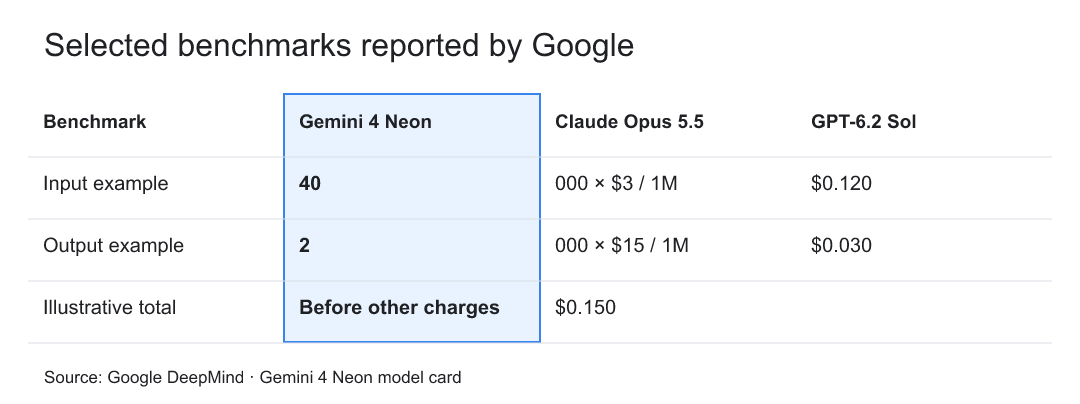
The example below excludes cache, storage, tools, and additional attempts. If the pipeline sends an extracted page range plus the original document, check what was actually billed. Avoid estimating costs only from the text you see in the final answer.
For the initial request, use this instruction as a starting point: “Measure short searchable, scanned, and long files independently. Compare billed usage instead of deriving token counts from page count alone. Explain which input supports each consequential claim or calculation. List any required checks you could not perform, and state what would let a reviewer finish the job.” Keep the instruction with the saved run so reviewers can distinguish a missed requirement from an unstated expectation.
Log usage at the level of a logical task and its individual attempts. Record the model identifier, endpoint, project, measured units, billing category, and rate date. Save the allocation rule you use for shared charges. A line item without observed usage belongs in an estimate, with its assumption visible. Wait for the project report before marking the expected amount as reconciled.
Include a low and high scenario by changing the two inputs most likely to move the bill. Keep the rate table fixed if you are testing changes in usage. If you are testing an announced price change, keep usage assumptions the same and date both schedules. This makes it easier to explain whether the forecast changed because of demand, rates, or something else.
Read the result and investigate misses
Compare the full-file method with a workflow that identifies the relevant pages before asking for a conclusion. Keep approval criteria identical. A lower token bill is meaningful only when the narrower input still supports the answer you need.
Keep a forecast and an observation column. In the forecast, multiply eligible units by the dated unit rate and account for likely repeats or fallbacks. In observation, preserve the actual bill and completion record. If the amount differs, look for a changed model, a cache eligibility difference, a larger output, or additional attempts before changing the whole forecast. Record the reason for each adjustment.
Two 30-page files are budgeted equally even though one is image-heavy and requires additional work.
Compare the estimate with one completed reporting period. Make a note of charges that arrive late, credits that apply once, and spend that belongs to another model or project. Record any operational work your team spends on validation separately. A forecast that correctly predicts model spend can still understate the cost of serving the workflow if it omits this effort.
Decide whether to adopt the workflow
Build estimates by file class and verify against metered production samples.
A low-cost request is useful when it completes the required job. Compare costs on accepted outputs of the same scope, and keep model charges distinct from the review or tooling time your team also pays for. A change in rates can alter the trade-off. Keep the usage assumptions and dated price reference so the calculation can be rerun later.
Name the person responsible for reviewing the result and the date you will revisit it. Keep one accepted and one rejected sample as references. A future model revision, revised billing entry, or change in the input mix is a good reason to run the checks again. When the evidence supports only a narrow change, document the task that qualifies and keep the existing process for the rest.
Conclusion
Estimate from billed token usage, including document processing and any accompanying text. A 40,000-input and 2,000-output example costs $0.15 at launch rates with no cached usage or extras.
Build estimates by file class and verify against metered production samples.
Frequently asked questions
What should I check first for API cost of reviewing a PDF?
Measure short searchable, scanned, and long files independently. Compare billed usage instead of deriving token counts from page count alone.
How should I handle a failed example?
Two 30-page files are budgeted equally even though one is image-heavy and requires additional work. Record the discrepancy and the relevant input or usage record. Require another run on a fresh case before changing the decision.
Can I apply these findings to another setup?
A low-cost request is useful when it completes the required job. Compare costs on accepted outputs of the same scope, and keep model charges distinct from the review or tooling time your team also pays for. A change in rates can alter the trade-off. Keep the usage assumptions and dated price reference so the calculation can be rerun later.
Keep reading
Gemini 4 Neon: reasoning benchmarks
Gemini 4 Neon: reasoning benchmarks — Explore reasoning benchmarks with a practical schedule revision example, checks for common mistakes, and a decision guide.
Read article Gemini 4 NeonGemini 4 Neon: research and citation review
Gemini 4 Neon: research and citation review. Assess published benchmarks and use a practical checklist to verify results on your own tasks.
Read article Gemini 4 NeonGemini 4 Neon: spreadsheet analysis review
Gemini 4 Neon: spreadsheet analysis review. Assess published benchmarks and use a practical checklist to verify results on your own tasks.
Read article