


Ai story writer · Give the protagonist something to do
An AI story writer can produce a premise, a list of characters, or a whole first draft. For character development, start with a choice your protagonist must make. “Mira is curious and stubborn” describes traits. “Mira must decide whether to enter a locked greenhouse before her mother comes back” gives those traits somewhere to show up.
Write what the protagonist wants at the beginning, what they will risk to get it, and why it matters on this particular day. Suppose Mira wants to retrieve a seed tray before a cold night. The greenhouse key is missing, and the neighbor has warned her that the door sticks. She may care because the tray belonged to a relative or because she promised to deliver the seedlings tomorrow. Choose one motive you can dramatize.
Give supporting characters their own objectives. The neighbor might want to avoid more damage to the door. A friend might want to keep Mira company but has to leave by a certain time. These motives create conflict without requiring anyone to act cruelly or irrationally. Put them in the prompt so the generated plot has more than one force moving it.
Use a short character brief
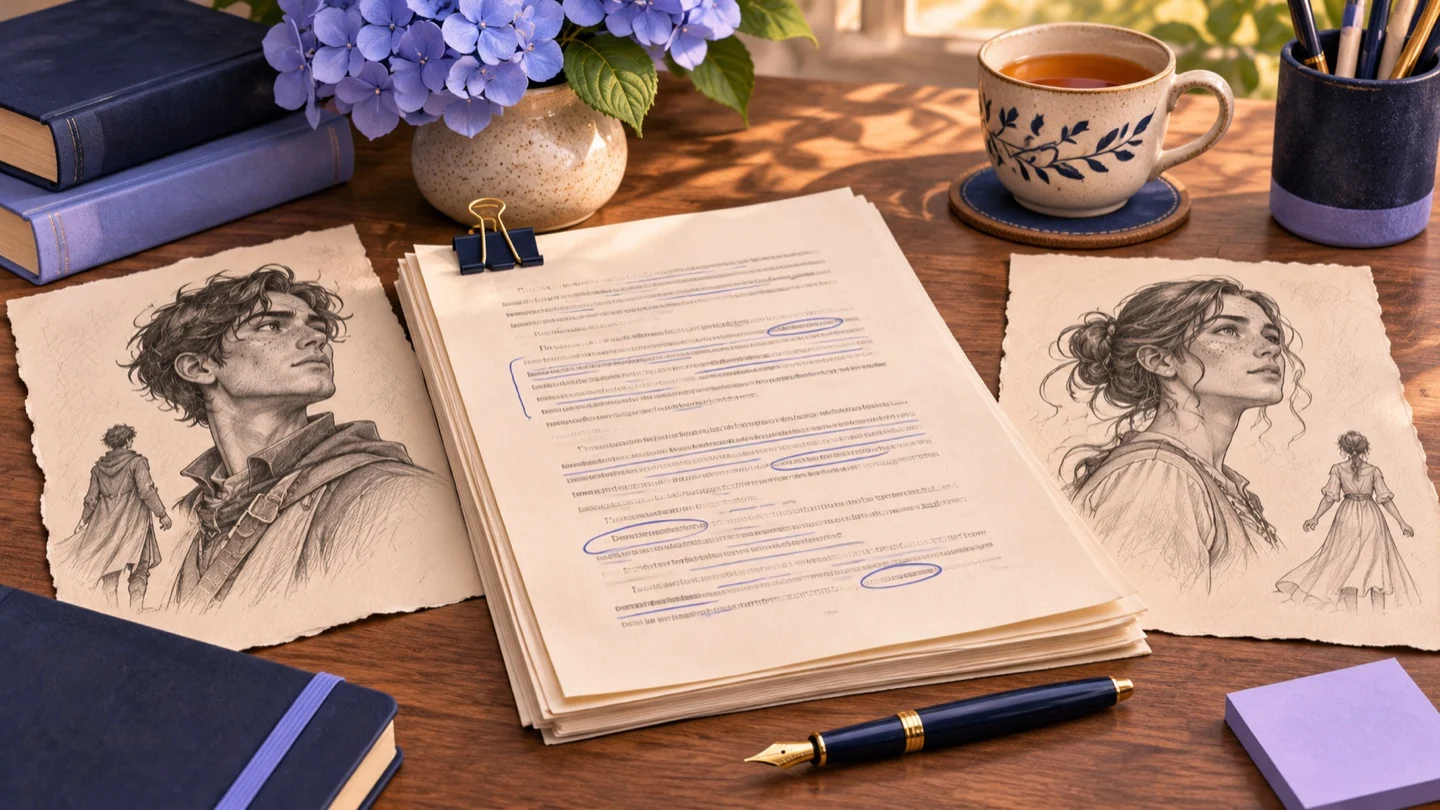
Define the important facts in five lines. Include one thing the protagonist wants, one pressure that makes it difficult, one action they tend to take under stress, one relationship they value, and one belief that may change. This brief should make it possible to tell whether a proposed scene belongs to that person.
Example brief. Mira has promised to save six tomato seedlings before a cold night. She tries to solve problems alone and is embarrassed to ask the neighbor for help. Her grandmother taught her to fix small things patiently. Mira believes asking for help proves she cannot be trusted. Write three plausible ways she might try to reach the seedlings. Explain what each choice costs her.
A generated answer might propose borrowing another key, constructing a risky workaround, or admitting she lost the key. Choose the one that reveals the most about Mira in the available space. An unusual solution can be entertaining, but it needs setup. If the model suddenly gives her locksmith skills, either establish those skills earlier or offer the model a constraint that rules them out. If your premise comes from a real event, see how to adapt a family memory into a short story before inventing dialogue or adding plot details.
Build a chain of causes and consequences
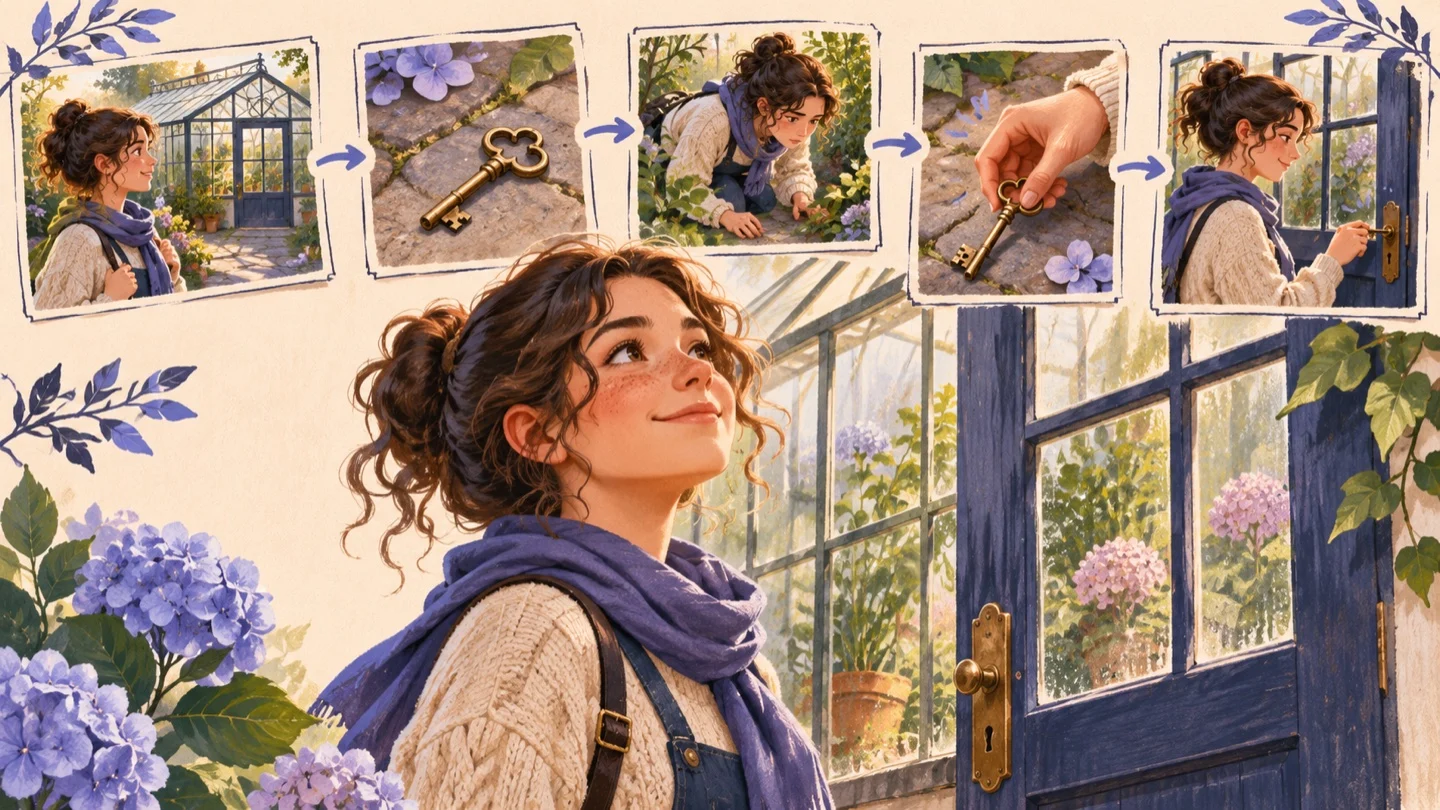
Arrange the story into four beats. First, the character sees the problem. Next, they make a choice that complicates it. Then, they confront the consequences and choose again. Finally, the story shows what changed. Each beat should be understandable in light of the previous one.
For Mira, the first choice could be to search alone and wait too long. The complication could be that the light fades while the seed tray is still inside. The later choice could be to tell the neighbor what happened and ask for help. If the ending simply introduces a stranger with another key, the solution may feel disconnected from Mira's behavior. A strong ending makes the result depend on a decision we watched her make.
Ask the AI to compare several structures before producing paragraphs. One version might be a quiet character story. Another might create tension through a time limit. A third might put the friendship at the center. Choose the version whose ending you would want to read, then rewrite the outline in your own words before you draft.
Draft and revise a single scene
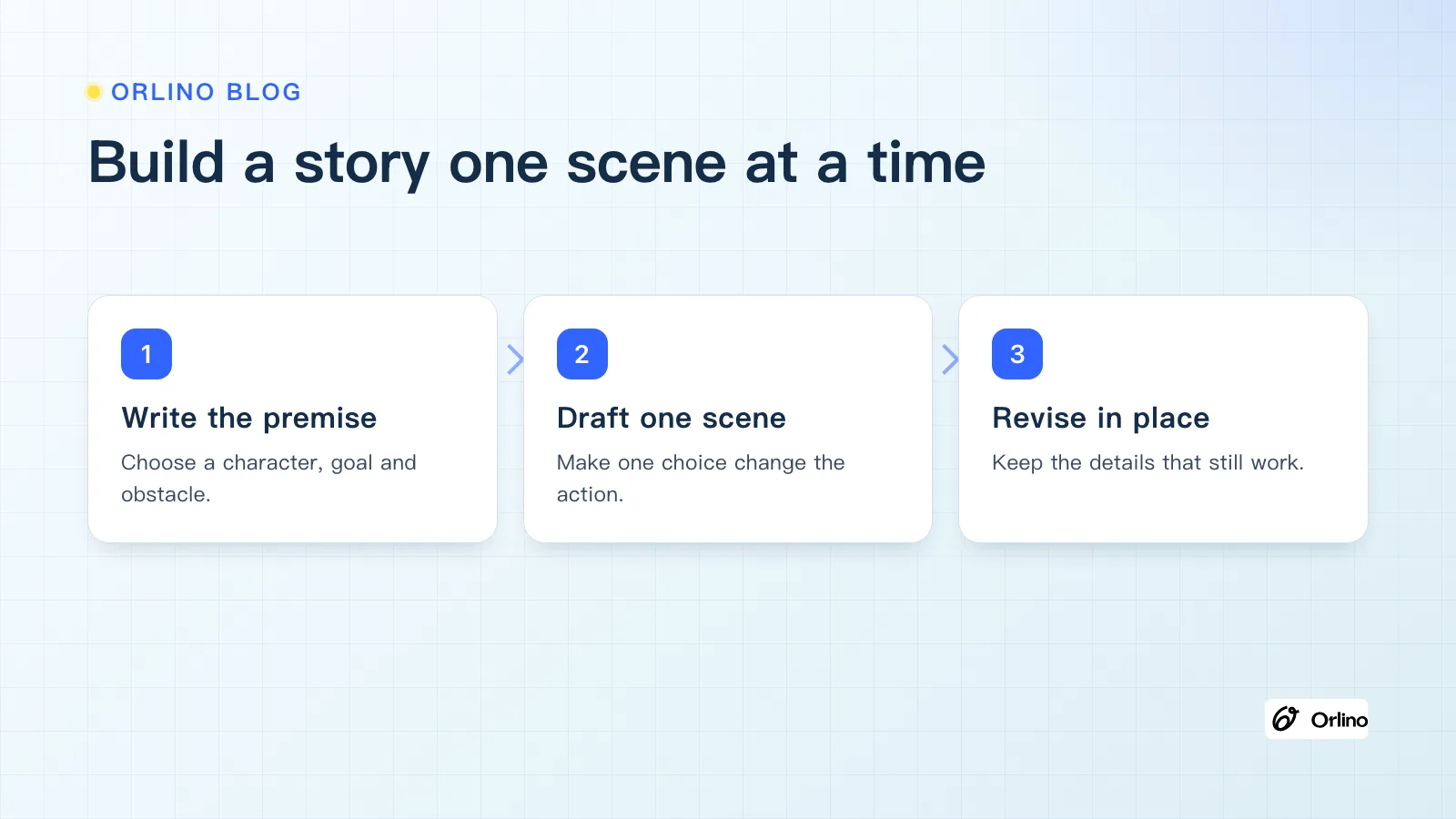
Give the tool the point of view, location, entering goal, and change you want by the end. Include the facts that cannot move. A scene can begin with Mira standing by the greenhouse and end with her deciding to knock on the neighbor's door. That shift is enough for a short scene. Keep the word count proportional to the amount that changes.
Read the dialogue separately from the action. If both characters sound the same, assign each a speech habit or a purpose in the exchange. Mira may answer in short bursts because she is embarrassed. The neighbor might ask pointed practical questions. Distinct intentions give their conversations more texture than randomly changing vocabulary.
Check the physical continuity. Who holds the flashlight? Is the door closed? Who knows that the tray is inside? If the generated scene introduces a second key, record it in your notes immediately or correct the draft. Small continuity errors can multiply when each follow-up includes only the latest paragraphs.
Use the AI as an editor with a defined job
For a developmental pass, ask three questions. Where does Mira make a choice? What makes the choice difficult? What changes because of it? That feedback can help you identify a passive middle or an ending that arrives too easily. Ask for examples from the draft, so you can inspect whether the diagnosis is fair.
For a line edit, keep the character and plot decisions fixed. Ask for alternatives to one paragraph, with the same point of view and information. Compare the options in the context of the scene. A vivid phrase can be worth keeping if it sounds like your narrator and helps the reader see what's happening.
Orlino's AI Story Generator can help explore a premise or draft a scene from your instructions. Use your brief and beat list as the source of truth. A story gets stronger when the events reveal what the characters value and what they are willing to change.
Try alternate endings against the same character arc
Imagine the outline reaches a choice at the greenhouse. In one ending, Mira finds the key in her pocket and saves every seedling. In a second, she asks the neighbor for help and learns that they can open the side vent together. In a third, she waits too long and manages to save only part of the tray. All three can work, but they imply different stories about what changes.
The first ending is satisfying only if the key was part of a clear setup and Mira's actions brought her to that discovery. Otherwise it resolves a story about asking for help through coincidence. The second makes cooperation the practical answer and gives the neighbor a reason to be in the story. The third puts some weight on Mira's earlier choice to wait, which may fit a story that takes consequences seriously.
Ask the AI to write two-sentence closing images for the two strongest endings. Keep the same setting, characters, and time. Compare the last image rather than the explanatory sentences. A closing shot of Mira holding the flashlight while the neighbor opens the vent can show a change in her behavior. A narrator telling us that she learned a lesson merely repeats what that image can imply.
If both versions seem generic, add one physical constraint and one earlier detail. Perhaps the vent has a latch that requires two hands, and Mira remembers her grandmother's advice to hold a flashlight low to see a catch clearly. A constraint creates a reason the action has to happen in a particular way. A prior detail makes the solution feel like it grew out of the story.
Create a short continuity record after choosing the ending. Note who knows about the missing key, who has access to the greenhouse, which plants survive, and what Mira decides differently. Use those points in each revision. If someone asks for a sequel later, the record gives the next scene a stable place to start. If a scene keeps getting cut short or rewritten in full, compare story generators by output length and revision controls to find a workflow that supports targeted edits.
Make dialogue do two jobs at once
In the greenhouse scene, the neighbor could ask, “When did you last lock it?” The question advances the search and tests whether Mira will admit she misplaced the key. Ask your writing assistant to propose three lines that each serve the plot and reveal a relationship. Keep the line that a person in the scene might actually say. Then read the exchange aloud and cut any reply that merely repeats known information. A short pause or physical gesture can carry the part of the answer the character is avoiding.
Frequently asked questions
Should I generate the plot or the character first?
Begin wherever you have a strong idea, then connect the two. Give the protagonist a choice that changes the plot and an outcome that means something to them.
How do I keep my character consistent?
Maintain a short reference with the character's goal, relationships, important knowledge, and decisions already made. Include the relevant details in new scene requests.
How can I avoid a generic ending?
Pay off something the story established earlier. Let a character act differently because of what happened, and show the consequence in a specific scene.
Keep reading
AI Story Generators Compared by Length and Editing
Use this AI story generator comparison to test story length, scene revisions, and how easily you can keep the parts you like.
Read article AI Story GeneratorTurn a Family Memory Into a Short Story With AI
Ai story generator · Turn a family memory into a short story with a repeatable AI writing workflow that preserves real details, privacy, and voice.
Read article