


Ai story generator · Choose a memory small enough to tell well
A family story does not have to cover a person's whole life. An afternoon in a kitchen, a delayed bus, or a first attempt at fixing a radio can hold enough change for a short piece. Pick a memory with a beginning you can picture, an action someone took, and a detail that still matters. Those three points give an AI story generator something specific to build on.
Imagine you remember folding dumplings with your grandmother on a rainy Saturday. You remember the blue bowl, the sound of rain on a metal awning, and how she showed you to pinch the wrapper twice. You cannot remember her exact words. These details already suggest an arc: you begin frustrated, watch her demonstrate, and end by making a dumpling worth putting on the plate.
Write down the adult reader or child who will hear the story. A bedtime version may need fewer names and a gentler pace. A piece for a family gathering can give a little more context about the place and why the moment matters now. The audience affects the wording and length without changing the facts.
Gather a small set of reliable details
Create three notes labeled confirmed, uncertain, and invented. Put the blue bowl and the folding technique under confirmed if you remember them with confidence. Put the precise year or exact phrase under uncertain. Save invented details for a fictionalized version and label them clearly when you share it. People can remember different versions of the same moment, and a good story can acknowledge that without sorting out every disagreement.
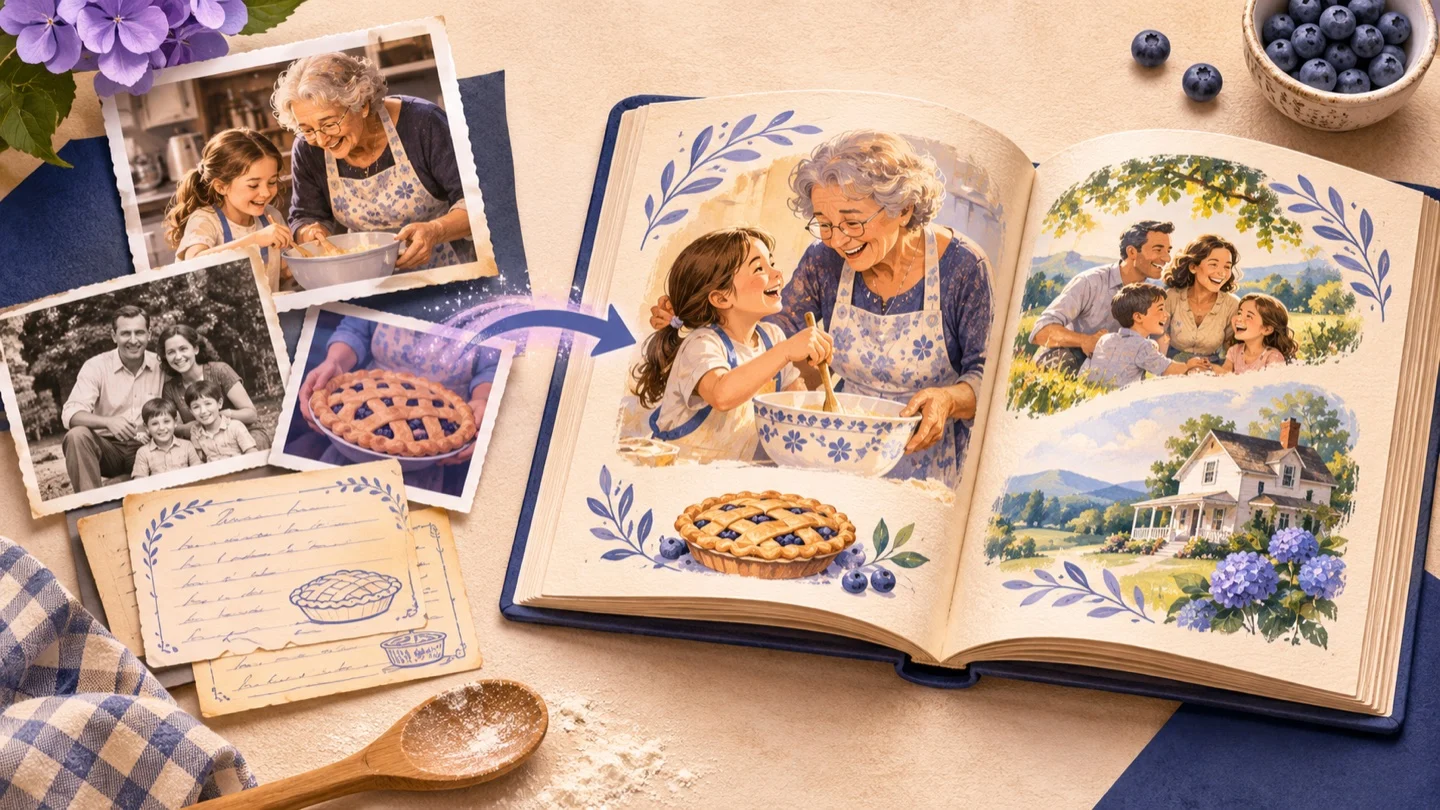
A photograph, recipe card, or note can help you check details. Transcribe the small part you actually need. If the piece will be public, ask family members before including names, photos, or details they might consider private. Changing a name can help, but an unusual location or story can also identify someone. Decide what to include before uploading or drafting around it.
Listen for your own words. The phrases you use when telling a story often carry more character than the first generated draft. Record a sentence about what surprised you or how the place smelled. Include it as a line you want to keep. This gives the model an example of the voice and leaves you with a detail only you could have supplied. If you want a fictionalized version with more plot development, build your characters and plot with an AI story writer before expanding the memory into several scenes.
Ask for an outline before asking for the draft
A compact outline makes it easier to spot invented facts early. Ask for three beats with one or two sentences each. The opening places the reader in the scene. The middle shows the small problem or change. The ending illustrates what stayed with you. Approve or correct this shape before requesting a full story.
Example prompt. Write an outline for a 550-word first-person family story about learning to fold dumplings. The blue bowl, rain on an awning, and double pinch are confirmed. I remember that my first dumpling fell apart. I do not remember the date or exact dialogue. Use an understated voice for a family audience. Mark any proposed fictional detail separately and keep it out of the outline unless I approve it.
Look for a change that belongs to the memory. The first draft may invent a competition, a sudden argument, or a moral at the end. A gentler change can be enough. Going from an awkward pinch to one dumpling that holds is a clear ending, especially if you can connect it to a feeling you genuinely remember. Keep events you can stand behind and cut the rest.

Draft around actions and sensory details
After approving the outline, ask for a scene-based draft. Encourage the model to render what people do rather than summarizing how they felt. A bowl pushed closer across the table can show encouragement. A second attempt at folding dough can show patience. This lets the original details carry the emotion without asking the narrator to name it on every line.
Review dialogue carefully. Quotation marks suggest words spoken as written. If you do not remember the exact words, paraphrase or tell the reader you remember the instruction more clearly than the phrasing. Be especially careful if a line attributes a value judgment, family history, or private feeling to someone else.
Read the story aloud. Mark phrases that sound more like a greeting card than your own voice. Replace broad descriptions with concrete ones. “She showed me the other corner” can be more convincing than “she taught me the importance of perseverance.” When the draft feels too polished, keep the irregular details that make it sound like a real person remembers it.
Revise for the people who will read it
For a child, simplify the sequence and keep the names clear. You can add a question at the end, such as whether they remember making something with a grandparent. For adults, you may keep a brief frame that says why you returned to the memory. A frame works best when it helps the scene rather than offering a long introduction.
Show a sensitive story to a family member before publishing it. Ask whether the piece represents people fairly and whether a remembered detail should be softened, corrected, or removed. Treat that response as part of editing. If there are conflicting memories, you can write “In my memory” rather than treating your account as the only possible version.
Save the draft with the notes you used to verify it. Orlino's AI Story Generator gives you a starting point from a prompt. Use it to organize the scene, then make the voice and the facts your own. The final piece should preserve the part of the day that someone would want to hear again. If you need room for longer drafts or several endings, compare AI story generators by length and editing controls before starting work on the full piece.
A before-and-after revision for the dumpling story
Here is a fictional revision example. An early draft says, “Grandmother told me that patience was the secret to life, and that day changed everything.” It sounds like an ending, but it attributes words to someone without a source and reaches beyond what the scene can show. Try starting the section with an action you can picture instead. “The first dumpling opened in my palm. She turned her own wrapper toward me and pinched the same corner twice.” This version gives the reader a sequence and a gesture. If you cannot confirm the palm detail, change it to what you do remember.
Follow with your own reaction. Maybe you were watching the hands more carefully the second time, or maybe your success was uneven. Give the result a proportionate ending. The story can close with setting the dumpling on the plate and reaching for one more wrapper. That action may convey enough progress for a reader to feel the change.
Save two separate documents if you want a fictional children's version as well. In the memory version, use only the remembered details or explicitly identify uncertainty. In the fictional version, you can add a name for the child, an imagined sound, or dialogue that serves the story. Label the versions before sharing them so that a relative who later reads one knows which creative choices you made.
For final editing, ask your reader to point to the line that feels most specific. Often it will be a simple physical detail. Keep it and trim a nearby explanation that tells readers how they should feel. Then ask whether any part surprised them because it seemed historically wrong. This separates voice feedback from fact-checking and makes both forms of review easier.
Some memories deserve a quieter treatment. If the scene includes a family disagreement or a loss, focus on what you observed and avoid assigning motives to others. Share the draft privately first when you can. A personal piece can be worth keeping even if its best audience is a few relatives around a kitchen table.
Frequently asked questions
How long should a family memory story be?
Choose a length the audience will enjoy. A single clear event can fit into a few hundred words. A reading for a gathering can be longer if another scene helps explain the memory.
Can I make parts of the story up?
You can choose a fictionalized approach. If you intend the story to be read as a memory, separate invented scenes or dialogue from what you recall.
What if I only remember a few details?
Choose one place, one action, and one sensory detail. A short vignette can work well without a precise date or a full account of the day.
Keep reading
Use an AI Story Writer to Develop Characters and Plot
Build stronger characters and plot with an AI story writer by defining goals, testing scene choices, and revising one beat at a time.
Read article AI Story GeneratorAI Story Generators Compared by Length and Editing
Use this AI story generator comparison to test story length, scene revisions, and how easily you can keep the parts you like.
Read article