


Define success for a vendor claim review
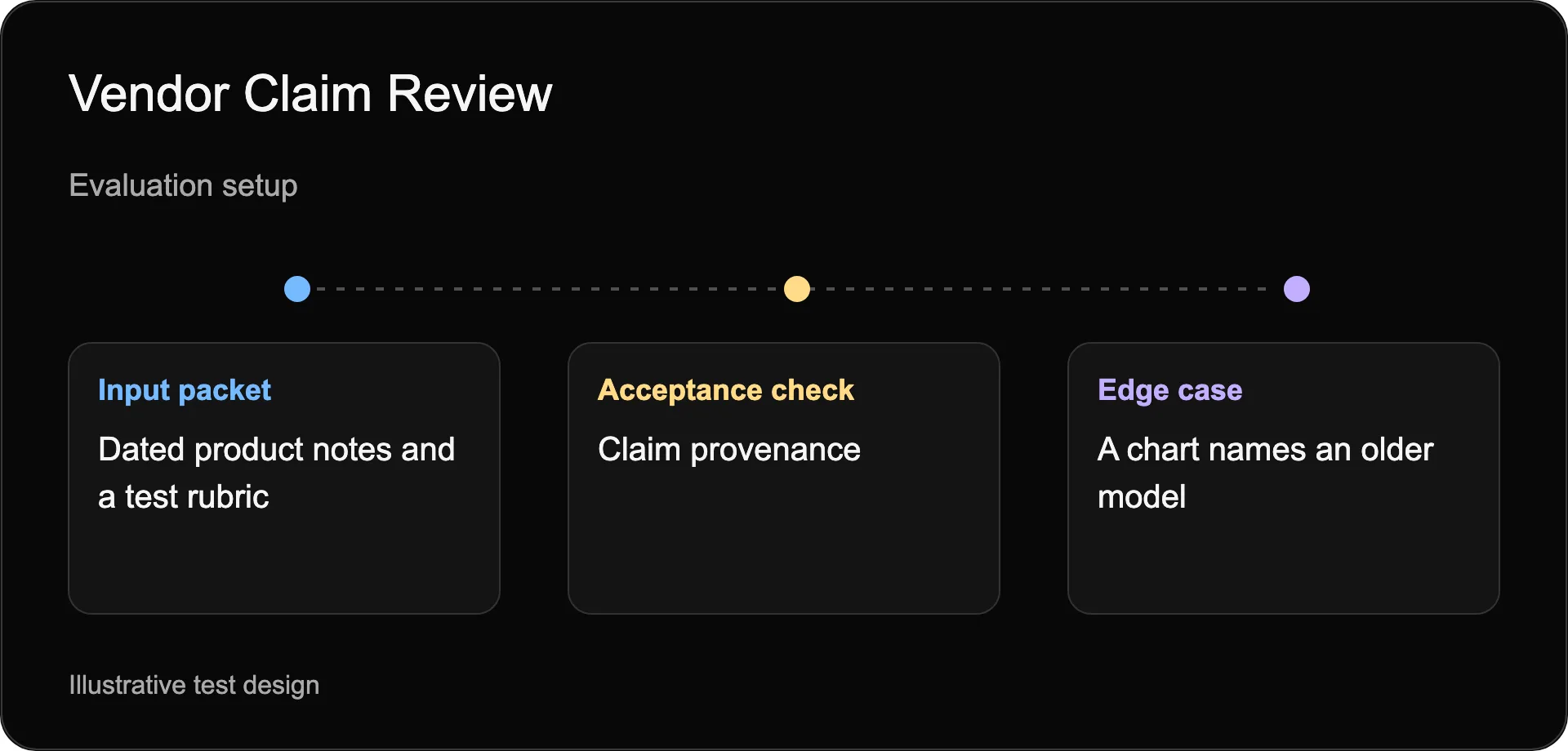
Assemble dated product notes and a test rubric and list the files every candidate will receive. Choose a single deliverable a reviewer can inspect. Before generating anything, describe how the reviewer will judge claim provenance. If the acceptance rule calls for correct totals, record the expected totals separately from the prompt so the reviewer can compare them independently.
Create a normal sample and a second sample for this edge case: a chart names an older model. Keep the acceptance criteria stable. Use a short reviewer note to state what a passing response does when the input is ambiguous. This gives the comparison a concrete failure mode and gives the team a reason to reproduce the test later.
What the release establishes
The OpenAI release cited below provides evidence for Astra and Sol. The announcement does not establish a Terra comparison. Record Terra as pending until an exact model identifier, access route, and matching evidence are available.
A provider benchmark describes results under its own evaluation settings. A team review should also record the setup it can actually use, including tool access, attachments, and model settings. If an exact version is unavailable, use the versions the team can test and record that limitation next to the result.
Read the evaluation details in OpenAI’s GPT-6.2 Astra and Sol release.
Run a matched pilot
Give each available candidate the same dated packet, instructions, and output format. Save the first response and any revisions. Record differences in tool availability before interpreting the output. Have one reviewer apply the same rules to every response, including cases where a candidate stops to request clarification.
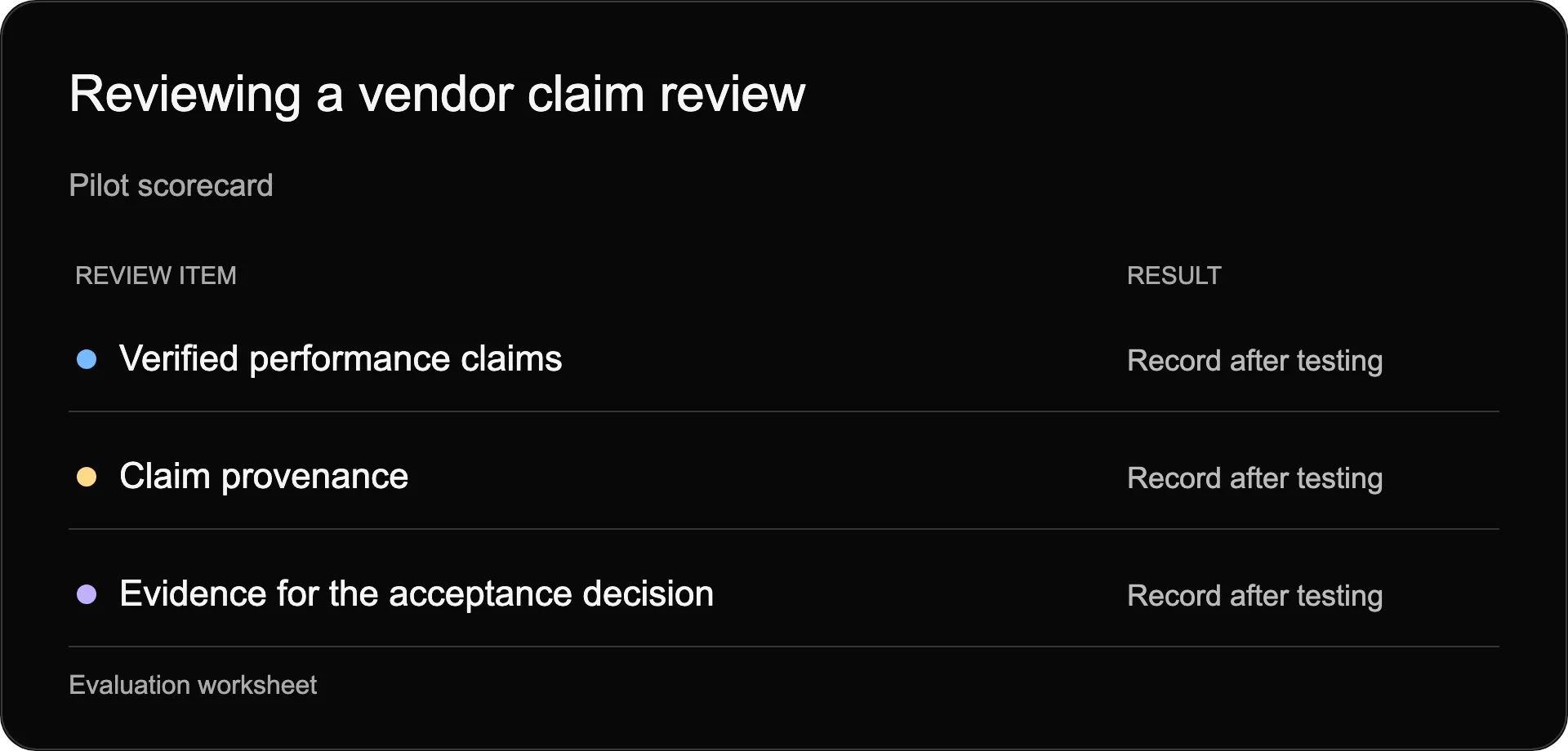
Track verified performance claims along with the status of claim provenance. Note whether an edit changed the substance or only the presentation. Keep rejected attempts in the record so a candidate that needed two retries does not appear to have completed the work with its final run alone.
Start the comparison by checking the edge case. For this pilot, label a response that mishandles a chart names an older model as needing review and capture the exact discrepancy. If both candidates fail the same check, clarify the prompt or repair the input packet and rerun both on the corrected version.
Decide which model to use next
Use the candidate that passes the acceptance check with a level of review your team can sustain. A faster first draft is useful for a recurring assignment when it also clears the required checks. A more demanding assignment may justify a second candidate if it reduces the need for specialist corrections.
Measure the full cost by recording billed usage, retries, and review time. A team that tracks review minutes can multiply them by an agreed hourly rate and report that amount separately from model or tool charges. If pricing is unavailable, preserve the measured review effort and mark the cost estimate as incomplete.
Write down the exact candidate, settings, review outcome, and exceptional cases. Revisit the choice when the inputs, access, or acceptance rule changes. A short decision record makes it easier to understand why the team routed a task to a particular model.
Conclusion
For a vendor claim review, start with dated product notes and a test rubric and a check for claim provenance. Use the normal sample and the edge case together to decide whether the candidate is ready for this workflow. Keep verified performance claims visible when the next reviewer revisits the choice.
Frequently asked questions
What should I test first on a vendor claim review?
Use one representative assignment and verify claim provenance against a source the reviewer can inspect directly.
Which edge case belongs in this comparison?
Include this case: a chart names an older model. Define the expected response before running the trial.
Which result should I keep for the next review?
Track verified performance claims, record the exact model settings, and save the evidence that supports the acceptance decision.
Keep reading
GPT-6.2 Terra Review: What Can Be Verified?
Compare GPT-6.2 options for a model catalog assessment with a practical test for exact model identity, review effort, and cost per accepted result.
Read article GPT-6.2Which GPT-6.2 Model Should I Use?
Compare GPT-6.2 options for a task intake with a practical test for clear reason for escalation, review effort, and cost per accepted result.
Read article GPT-6.2GPT-6.2 Astra Benchmarks Explained
Compare GPT-6.2 options for a multistep evidence brief with a practical test for evidence traceability, review effort, and cost per accepted result.
Read article