


Define success for a multistep evidence brief
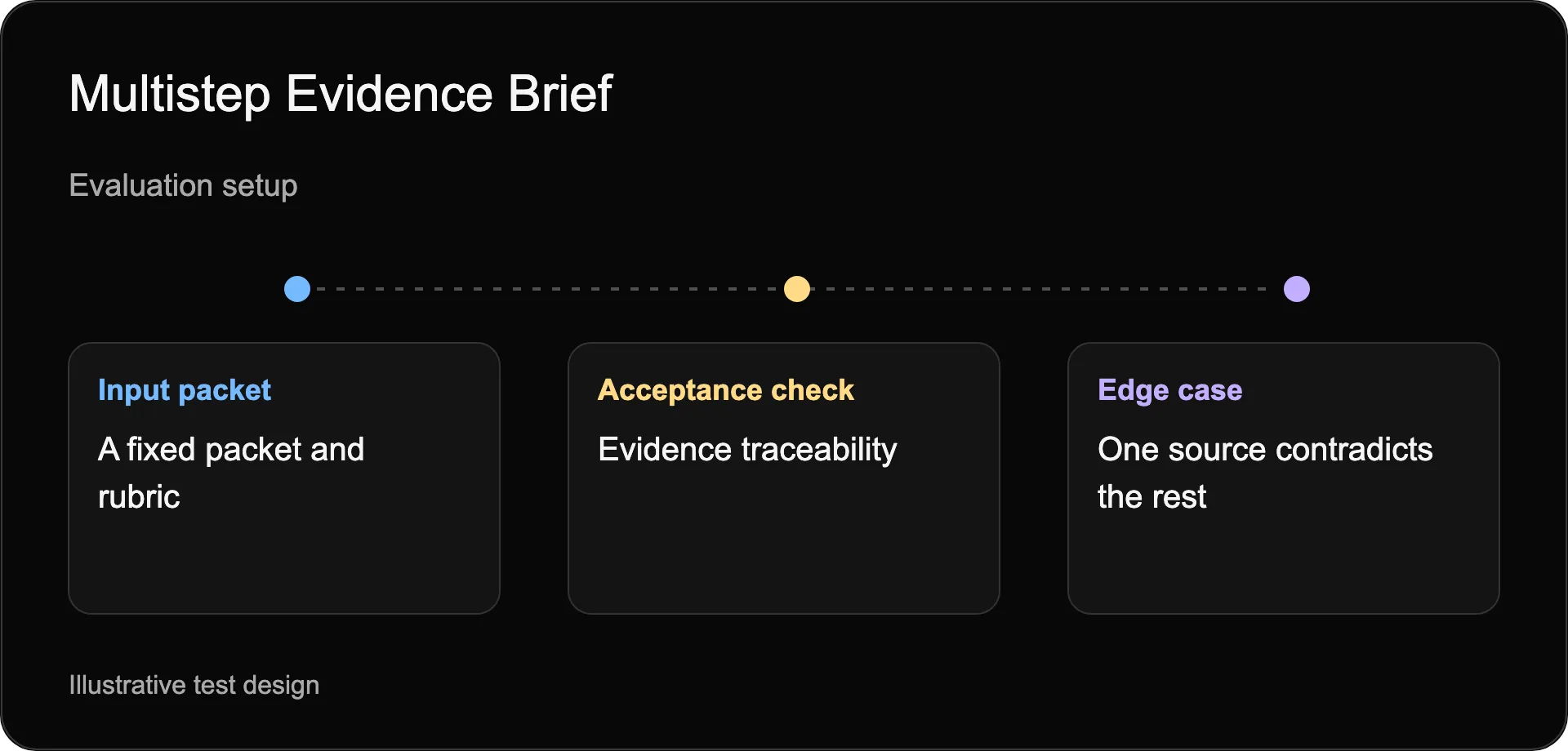
Assemble a fixed packet and rubric and list the files every candidate will receive. Choose a single deliverable a reviewer can inspect. Before generating anything, describe how the reviewer will judge evidence traceability. If the acceptance rule calls for correct totals, record the expected totals separately from the prompt so the reviewer can compare them independently.
Create a normal sample and a second sample for this edge case: one source contradicts the rest. Keep the acceptance criteria stable. Use a short reviewer note to state what a passing response does when the input is ambiguous. This gives the comparison a concrete failure mode and gives the team a reason to reproduce the test later.
What the release establishes
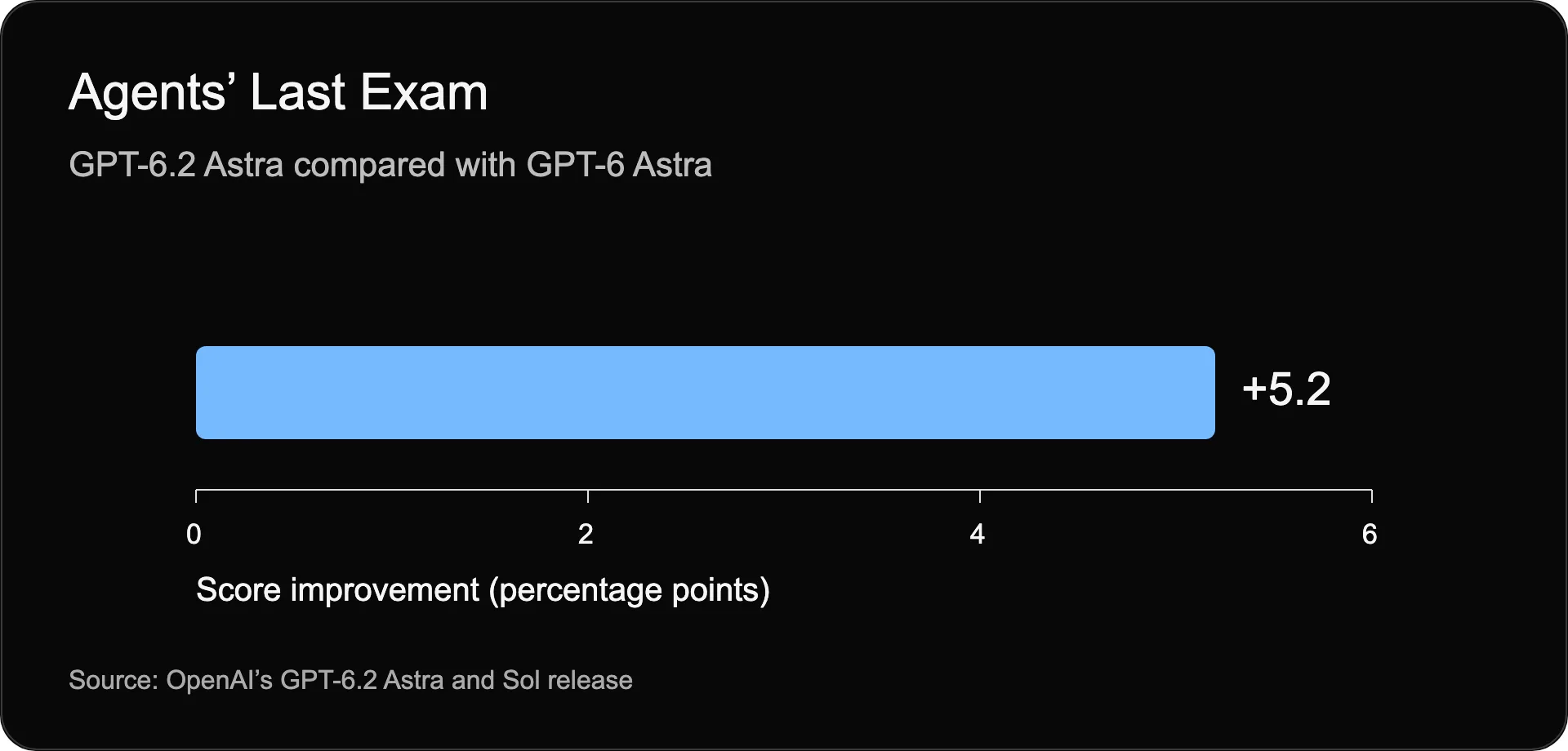
OpenAI positions Sol for everyday work and Astra for more demanding professional projects. In its launch report, GPT-6.2 Astra improved by 5.2 percentage points over GPT-6 Astra on Agents’ Last Exam. That comparison is between Astra generations. Use it to decide what to test locally, and record your own results separately.
A provider benchmark describes results under its own evaluation settings. A team review should also record the setup it can actually use, including tool access, attachments, and model settings. If an exact version is unavailable, use the versions the team can test and record that limitation next to the result.
Read the evaluation details in OpenAI’s GPT-6.2 Astra and Sol release.
Run a matched pilot
Give each available candidate the same dated packet, instructions, and output format. Save the first response and any revisions. Record differences in tool availability before interpreting the output. Have one reviewer apply the same rules to every response, including cases where a candidate stops to request clarification.
Track rubric pass rate along with the status of evidence traceability. Note whether an edit changed the substance or only the presentation. Keep rejected attempts in the record so a candidate that needed two retries does not appear to have completed the work with its final run alone.
Start the comparison by checking the edge case. For this pilot, label a response that mishandles one source contradicts the rest as needing review and capture the exact discrepancy. If both candidates fail the same check, clarify the prompt or repair the input packet and rerun both on the corrected version.
Decide which model to use next
Use the candidate that passes the acceptance check with a level of review your team can sustain. A faster first draft is useful for a recurring assignment when it also clears the required checks. A more demanding assignment may justify a second candidate if it reduces the need for specialist corrections.
Measure the full cost by recording billed usage, retries, and review time. A team that tracks review minutes can multiply them by an agreed hourly rate and report that amount separately from model or tool charges. If pricing is unavailable, preserve the measured review effort and mark the cost estimate as incomplete.
Write down the exact candidate, settings, review outcome, and exceptional cases. Revisit the choice when the inputs, access, or acceptance rule changes. A short decision record makes it easier to understand why the team routed a task to a particular model.
Conclusion
For a multistep evidence brief, start with a fixed packet and rubric and a check for evidence traceability. Use the normal sample and the edge case together to decide whether the candidate is ready for this workflow. Keep rubric pass rate visible when the next reviewer revisits the choice.
Frequently asked questions
What should I test first on a multistep evidence brief?
Use one representative assignment and verify evidence traceability against a source the reviewer can inspect directly.
Which edge case belongs in this comparison?
Include this case: one source contradicts the rest. Define the expected response before running the trial.
Which result should I keep for the next review?
Track rubric pass rate, record the exact model settings, and save the evidence that supports the acceptance decision.
Keep reading
GPT-6.2 Astra Cost per Task: An Evaluation Guide
Compare GPT-6.2 options for a strategy document review with a practical test for review and tooling charges, review effort, and cost per accepted result.
Read article GPT-6.2GPT-6.2 Astra Performance on Long Tasks
Compare GPT-6.2 options for a board briefing package with a practical test for deliverable completeness, review effort, and cost per accepted result.
Read article GPT-6.2GPT-6.2 Astra Review for Complex Projects
Compare GPT-6.2 options for a quarterly business review with a practical test for cross-file consistency, review effort, and cost per accepted result.
Read article