


Two dialogue choices can stay distinct even when they share a destination. A useful dialogue map records each source-choice pair, its destination, and whether that destination ends the path. Game Narrative Designer preserved separate choices in two fictional graphs supplied to Orlino without adding story facts.
List the transitions before writing the scene
Give each node a stable name and specify where each choice leads. Mark terminal nodes explicitly. Keeping that structure separate from dialogue prose makes it easier to review the paths before adding character voice or scene detail.
Our first fictional graph had a Root node with two choices. Knock led to Hall, and Leave led to Street. Hall and Street were terminal. These were the only supplied nodes and edges.
We selected GPT-5.6 Sol and Game Narrative Designer in a new Orlino web-app task and requested one table with source node, choice, destination, and terminal status. The reply preserved both paths:
| Source node | Choice | Destination | Destination is terminal |
|---|---|---|---|
| Root | Knock | Hall | Yes |
| Root | Leave | Street | Yes |
Keep intentional convergence intact
The second independent task changed the structure. Entry offered Open and Pause, and both choices led to the terminal node Waiting. The shared destination was explicitly intentional.
| Source node | Choice | Destination | Destination is terminal |
|---|---|---|---|
| Entry | Open | Waiting | Yes |
| Entry | Pause | Waiting | Yes |
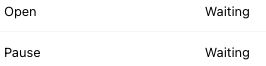
The reply kept the two rows. It did not remove a choice because the destinations matched, invent an extra ending, or turn Waiting into a loop. This is the point to check when a scene lets the player express different intentions while returning to a shared path.
A starting prompt for a fixed dialogue map
Use only this fictional dialogue graph:
Entry has two choices:
- Open leads to Waiting.
- Pause leads to Waiting.
Waiting is terminal.
The shared destination is intentional.
These are the only nodes and edges.

Return exactly one table with source node, choice,
destination, and whether the destination is terminal.
Keep both distinct choices even though they converge.
Do not invent loops, branches, dialogue, or lore.
Reply in English in chat only. Do not create files
or change external systems.
Review the rows against the planned paths
Check each source-choice pair against the brief, then check the destination and terminal flag. Count choices separately from endings. Two rows with the same destination may be deliberate; two rows with the same source and choice may need a closer look.
Both tasks reopened with the same transition rows. The test checks small supplied graphs in chat, not whether a scene runs inside a game.
This workflow covers a supplied choice-to-destination map in chat. It does not establish that a story runs in a game engine, that a larger graph is valid, or that player choices produce any measured outcome.
Once your paths are settled, Orlino can help turn a small dialogue graph into a table for review before you write the scene.
Product information and editorial note
This article describes the bounded workflow and examples shown above. It is not an independent benchmark or a guarantee that other inputs, models, or app versions will behave the same way. Check the app for current model availability and usage limits.
Published by Orlino Editorial. Read our editorial process.
Try your next task in Orlino.
Bring your notes, files, and questions to Orlino. Choose the app for your device.
Keep reading
Write a developer event FAQ from confirmed details
Draft a developer event FAQ in Orlino from confirmed details. Keep invite-only access and undecided recording plans accurate, then review before sharing.
Read article Work & productivityClassify search terms with explicit matching rules
Classify search terms in Orlino with explicit matching rules. Check priority, empty queries and literal substrings before using the labels.
Read article